Light
Beyond
black
Outrenoir is the light that black reveals. We design light as a subtraction: what is lit only exists because the rest is not.
Our mission: to turn light into a tool serving art and museography, with tailored solutions that enrich the perception and experience of spaces.
Our vision: to make light a discreet yet essential player, able to reveal the works without altering them, to add relief to spaces and to create comfortable, immersive experiences for visitors.
Serving the art
Light is a tool serving the works and the museography, never an end in itself: the studio always places itself at the service of the project.
Reveal without altering
Reveal the essence of the works while respecting their conservation: light levels, exposure time, filtering of sources.
Give relief
Shape volumes, materials and spaces, to enrich the perception of the works and the reading of the space.
Visitor comfort
Comfortable, immersive visits: no glare, gentle transitions, light that goes unnoticed.
Tailor-made
Every space has its own needs: no standard solution, but an answer designed for the project, from temporary exhibitions to new museums.
Working together
With museums, artists, curators, architects, exhibition designers and other lighting designers.
From listening
to focusing
Steps 01 to 04 make up the design; steps 05 and 06 follow the technical delivery through to focusing, work by work.
| No. | Step | Content | Deliverable |
|---|---|---|---|
| 01 | Listening | Meeting the museum, the curator, the artist, the exhibition designer or the architect: the narrative, the visitor route, the schedule and the budget. | Lighting brief |
| 02 | The works and the space | Study of the works and their sensitivity to light, of volumes, materials and daylight, and of conservation constraints. | Survey and assessment |
| 03 | Design | A stance that serves the project: what to reveal, what to leave in shadow, the atmosphere and the comfort of the visit. | Sketch design, photomontages |
| 04 | Tailored solutions | Choice of fixtures, optics and filters, illuminance calculations, costed scenarios fitted to the needs of the space. | Layout, costing |
| 05 | Technical delivery | Following the installation with the venue's teams and the contractors, for a discreet and seamless integration of the lighting. | Site supervision |
| 06 | Focusing | Aiming and focusing work by work, in contact with the works: the know-how gained over seven years at the Musée d'Orsay. | Scenes and guidelines |
See the light
before the space
With Le Centre and Gauthier Le Rouzic, the studio works with light in digital twins: 3D replicas of galleries and works, visited in VR headsets.
Preview
The space is surveyed and rebuilt in 3D: fixtures, beam angles and levels are placed and set in it, and the client decides by walking through it in a headset, before any work on site.
Preserve
A temporary exhibition disappears with its light. Its twin keeps the hang, the framing and the atmosphere, for research, for the memory of the venue and for future visitors.
Share
Lit galleries can be visited anywhere: in a headset, on the web, at school, in hospital or in a care home, with the same light as on site.
Measure,
show
Choices are made on images and measurements: light is shown and calculated before it is installed, then focused on site.
- Plans and layouts in DWG format, one layer per family
- Direct and indirect illuminance calculation by zone
- Photomontages on photographs of the space
- Wireless programmed scenes, handed over with the file
- Digital twin of the space, visited in a VR headset before work begins
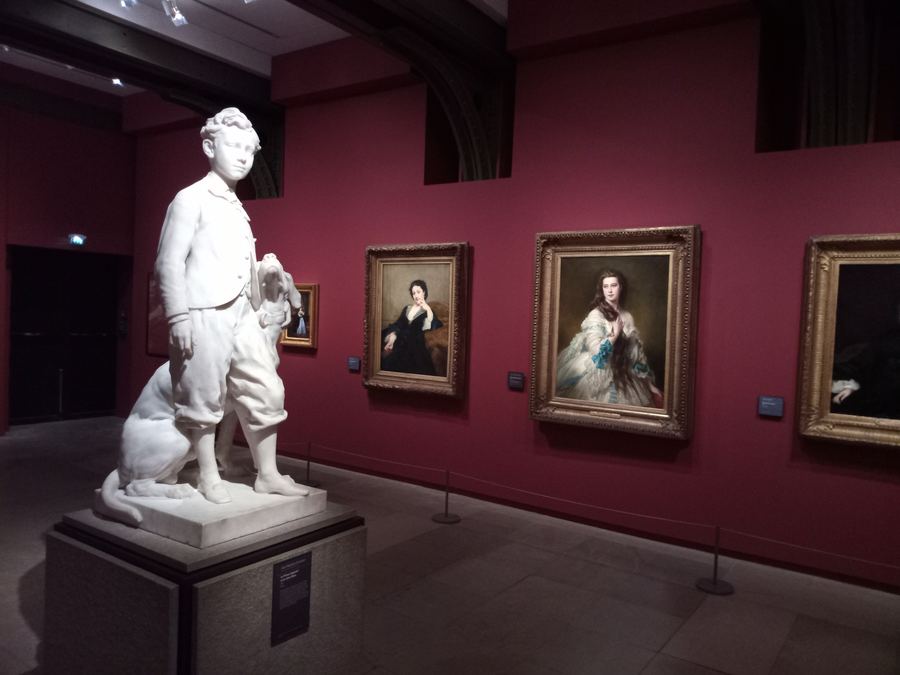 Musée d'Orsay
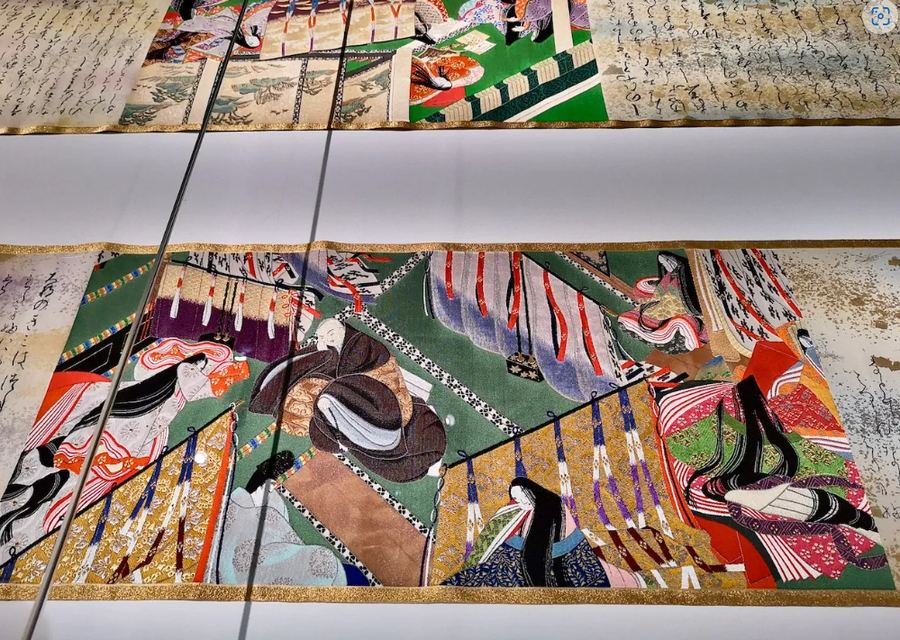 Musée Guimet